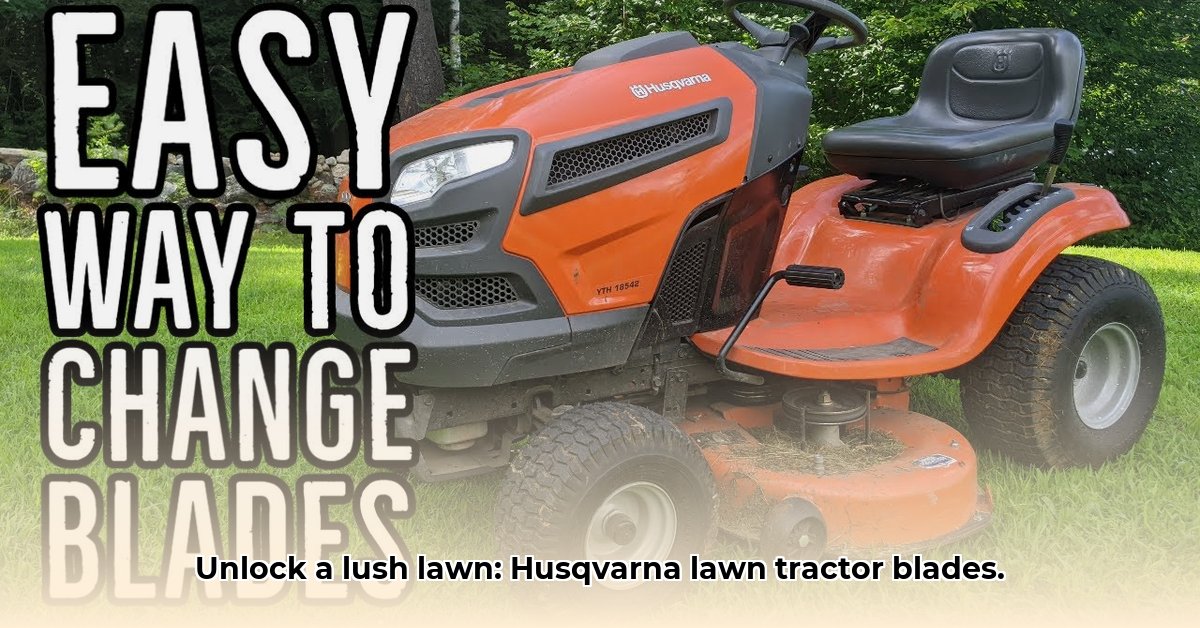
A vibrant, healthy lawn isn't just aesthetically pleasing; it's a testament to sustainable land management. And at the heart of a perfectly manicured lawn lies the often-overlooked hero: the lawn tractor blade. Dull blades tear and shred grass, leading to an unhealthy, patchy lawn and increased fuel consumption. Sharp blades, on the other hand, provide a clean, precise cut, promoting vigorous growth and minimizing waste. This guide will equip you with the knowledge to choose, maintain, and troubleshoot your Husqvarna lawn tractor blades, leading to a greener lawn and a lighter environmental footprint. For more information on lawn tractor blades, check out this helpful resource: Lawn Tractor Blades.
Understanding Your Husqvarna Lawn Tractor Blades
Husqvarna offers a variety of blades, each designed for specific mowing styles and lawn conditions. Understanding these differences is crucial for achieving optimal results and promoting lawn health.
Mulching Blades: These blades finely chop grass clippings, returning nutrients to the soil as natural fertilizer. This reduces waste, minimizes the need for chemical fertilizers, and creates a healthier, more vibrant lawn. Think of them as nature's slow-release fertilizer system.
High-Lift Blades: Designed for bagging or side-discharge mowing, these blades lift grass clippings higher, resulting in a cleaner cut and efficient collection. Perfect for areas where you prefer a tidy finish and don't want clippings scattered.
Standard Blades: A versatile option suitable for various mowing styles, these blades provide a balanced approach and are ideal for those who are unsure which blade type best suits their needs.
Beyond blade type, the material also influences performance and sustainability. Many Husqvarna blades are made from high-carbon steel, known for its durability and strength. However, increasingly, you'll find blades made from recycled materials, a more environmentally conscious choice. Always consult your owner's manual for the correct blade type and size for your specific Husqvarna model. Mismatched blades can lead to damage and reduced performance.
A sharp blade will significantly extend its lifespan. Regular sharpening, typically every few months depending on usage and conditions, prevents damage to both your lawn and your mower. Dull blades lead to uneven cuts, tearing the grass and increasing stress on the mower's engine, ultimately wasting fuel and negatively impacting the environment.
Choosing the Right Blade: A Personalized Approach
Selecting the right blade involves considering your lawn type, mowing style, and environmental preferences. The following table compares key features to aid your decision:
| Blade Type | Cutting Style | Mulching Efficiency | Grass Type Suitability | Durability | Environmental Impact |
|---|---|---|---|---|---|
| Mulching Blade | Fine, even chop | Excellent | All Grass Types | Moderate | Excellent |
| High-Lift Blade | Higher discharge | Moderate | All but very tall grass | Good | Moderate |
| Standard Blade | Clean, consistent cut | Moderate | Most grass types | Good | Moderate |
Remember to cross-reference this table with your Husqvarna model's specifications to ensure compatibility. Choosing the correct blade will save you time, money, and effort in the long run.
Blade Maintenance and Replacement: A Step-by-Step Guide
Regular maintenance extends blade life, ensures a clean cut, and prevents damage to your mower. Follow these steps:
- Safety First: Always disconnect the spark plug and wear safety glasses and gloves.
- Inspection: Examine blades for damage; bends, cracks, or excessive wear compromise cutting quality.
- Sharpening: Use a file designed for mower blades, maintaining the original blade angle for even cutting. If you are uncomfortable sharpening your blades, take them to a professional.
- Balancing: Ensure blades are balanced to prevent vibrations; an unbalanced blade can damage your mower. Most hardware stores offer balancing services.
- Replacement: Replace severely damaged or excessively worn blades; attempting to repair them can be dangerous.
Sustainability Considerations: Eco-Friendly Mowing
Choosing recycled materials for your Husqvarna blades minimizes your environmental footprint. Mulching blades contribute to sustainable lawn care by eliminating the need for chemical fertilizers. However, even with sustainable blades, responsible disposal is crucial; properly recycle your old blades to prevent them from ending up in landfills. These seemingly small actions contribute to a larger positive impact on the environment.
Troubleshooting Common Problems
Addressing common issues promptly maintains your lawn's health and your mower's performance. Here are some solutions to frequent problems:
Uneven Cutting: Dull or damaged blades are the most likely culprits. Sharpen or replace them.
Excessive Vibrations: This often indicates unbalanced blades. Ensure blades are properly balanced.
Scalping (cutting the grass too short): Adjust the cutting height on your mower deck.
By following this guide, you can transform your lawn care routine into a sustainable and efficient practice. Sharp blades contribute to a healthier lawn, a more efficient mower, and a reduction in your environmental impact. Remember, a little maintenance goes a long way in creating the perfect lawn.